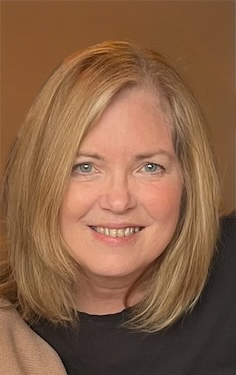
When I was 19, I found myself in an unhealthy relationship and became pregnant. I went to a clinic and took the test. They said I was around seven weeks pregnant and said, “It’s just a clump of cells; we can take care of this problem.” I left the office in a daze, not knowing what to do. I was living 3,000 miles away from home without any close friends or family nearby to confide in. The man I was living with was possessive, controlling, and emotionally abusive. He also had three children from his previous marriage, with whom he wasn’t involved and did not support. I felt trapped and alone.
The clinic I had gone to for the test made me an appointment at a different clinic to have an abortion. I was given no information on what the procedure would be like or what was actually going to happen. When I arrived at the clinic, it was filled with women sitting around in a dirty waiting room. I became emotional, as I was alone, scared, and very conflicted. When it was my turn, the doctors checked me and declared that I was more than nine weeks, which was beyond that clinic’s limit, so they sent me out to make an appointment with a different clinic that was equipped to do later-term abortions. I think, because I was so emotional, they didn’t want me to go through the waiting room and scare other women, so I was scooted out the back door by the trash cans.
I reached the car where my boyfriend was waiting and told him what happened. He was happy that I didn’t have the procedure. That made it even harder for me because I felt that I just couldn’t continue to carry his child. I would be a single mom with no education and no future. All I could see was myself, poor, on social services, with a child struggling to get by without any support from the child’s father.
Two weeks later, I went to the second clinic, where I had a first-trimester surgical abortion at eleven weeks pregnant. I was again not given any information about what was going to happen, and I was awake for the entire thing. I’ll never forget the sounds of the machine, the smells, and the indifference of the doctor and nurse in that room.
When I experienced complications after the procedure and called the office several days later, I received no help. My body eventually healed, but my mind and emotions were a mess. I suffered from deep depression and PTSD symptoms from that experience for years. I eventually left that relationship and returned to my hometown. It was then that I was introduced to the forgiveness of Jesus that changed my life dramatically. But I still suffered from anniversary syndrome and nightmares from the procedure
Four years after my abortion, by God‘s grace, I met a woman who was involved with starting a crisis pregnancy center in our town. She strongly encouraged me to attend a grief recovery program for women who had experienced abortion and pregnancy loss. That was the beginning of a journey of healing for me. Over the next ten years, I attended two more of those recovery groups, which brought more and more healing.
I say recovery is like peeling an onion. There are layers of grief, regret, guilt, and shame that need to be peeled back, exposed, and healed.
As a Christian woman, it was embarrassing, and I was plagued with guilt and shame knowing that I had ended the life of my child. Every year on Sanctity of Human Life Sunday, when a speaker would come to church, I would have to leave the room. Eleven years later, I married, and my husband and I struggled with miscarriages and infertility for five years. After three miscarriages and years of infertility testing and treatments, God blessed us with two miracle children.
As time progressed and the healing continued, I realized that God was not going to waste my pain. He was calling me to bring healing to others. Thirty-five years after my abortion, I took a position at the same crisis pregnancy center where I started my first grief recovery program, Care Net of Central New York, which is now Willow Network. I truly believe that God certainly does not waste a hurt. Everything that we go through has a purpose. Pregnancy loss and infertility are the valleys that God has used to show me his faithfulness and to equip me to minister healing and hope to others for the last ten years.
We are taught as a society that it’s “our bodies, our choice,” but when we choose to terminate a pregnancy, we are not allowed to grieve because “we chose to terminate.” For that reason, many women grieve silently for decades. Women need to realize that every pregnancy makes an impact on them physically and emotionally. We need to recognize that we connect on an emotional and neurological level with every baby that we carry. We need to grieve every loss.
Unlike the 1980s, when surgical abortion was the only option, chemical abortion is now widely available online. Many women never see or speak with a doctor. The experience at home can be comparable to a miscarriage—except they are often delivering that baby completely alone, without medical guidance or emotional support.
My heart breaks for women who believe they must handle this moment by themselves.
There are also real medical risks involved. Without proper evaluation, a woman may not know if something is wrong until she becomes very ill. And when fear and shame are present, many delay asking for help.
If you are reading this and have walked through an experience like this, please hear me out. You are not alone, you are not beyond grace, and your story still matters to God.
And for the rest of us, we are called to be a place of refuge—not judgment. A place where women are seen, supported, and reminded that God’s grace is deeper than any pain they carry.
And may we be men and women who create safe spaces, who listen without condemnation, and who extend compassion before questions. Because true ministry doesn’t begin with answers—it begins with presence.
And that is the kind of love Christ showed us.
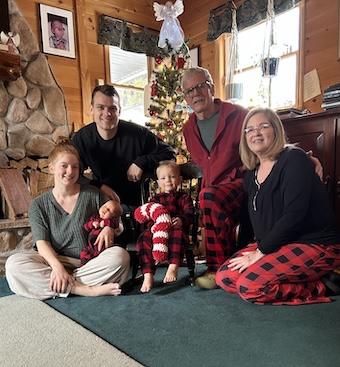
More about Amy: Amy is a Client Advocate at Willow Network in Utica, New York, and she is a proud mother of her now adult miracle babies and her precious grandchildren.